
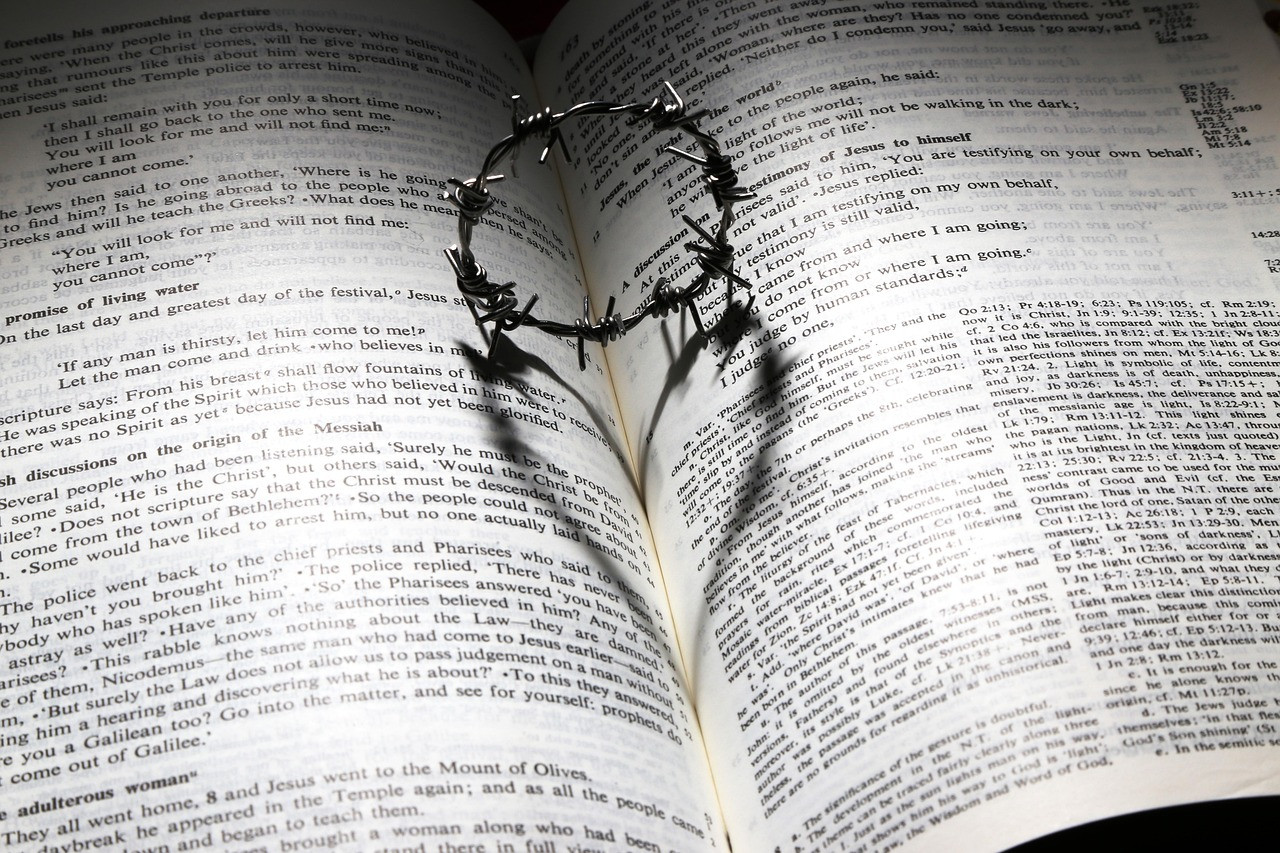
God is the designer of our minds and our bodies. God is the one who teaches us the truth through His Word.
Tip #1: Realize that your feelings are not facts.
Feelings are just information. It is factual that you are having feelings. You are having certain feelings, and these sensations may be labeled with a certain word that says what the feeling is. This does not mean the feeling is telling you the truth about your value, about the situation, about someone else's intent, or about whether you're in danger.
Our emotions are not indicators of our worth, of our salvation, or of our spiritual standing. Emotions are signals letting us know how our body and mind are reacting to circumstances. Feelings don't define you. Feelings are simply messengers that God put into the body to alert you. Jesus Himself felt grief, righteous anger, compassion, and sadness.
1 Peter 5:6-7 says, "Humble yourselves, therefore, under the mighty hand of God so that at the proper time he may exalt you, casting all your anxieties on him, because he cares for you."
Tip #2: Realize that your body is not separate from your spirituality.
Jesus had a fully human body and he was fully God and fully human. It was by the shedding of Jesus' physical blood and the physical raising of His body that saved us. Jesus is perfect.
Knowing that we are safe physically can help us to feel more into the truth that Jesus is our peace. If your body is not able to recalibrate and rest, it's hindering you from the fullness of the experience of being able to rest our bodies, minds, souls, and spirits in Christ.
Tip #3: Boundaries are Biblical.
God Himself gave Adam and Eve boundaries.
Genesis 2:16-17 says, "And the Lord God commanded the man, saying, "You may surely eat of every tree of the garden, but of the tree of knowledge of good and evil you shall not eat, for in the day that you eat of it you shall surely die.""
God gave people free will with choice and warning. Adam and Eve ate from the fruit in the garden of Eden and that's what caused the problem. As a result, God set up more boundaries.
Genesis 3:23 says, "therefore the Lord God sent him out from the garden of Eden to work the ground from which he was taken."
Jesus set boundaries for Himself while on earth. He was not available to everyone all of the time. Even Jesus went away to pray.
Healthy boundaries are simply saying that we as humans have limits to our energy, time, resources, and should steward them wisely.
Tip #4: Prayer is powerful and so is therapy.
Therapy is not a lack of faith, but is an act of stewardship. The Bible tells us that there is value in counsel. Jesus Himself is the mighty counselor. You have to be wise with the person you choose as your therapist, so that they don't lead you into anything that isn't according to Godly parameters. God uses many tools to bring about healing and therapy could be one of them.
Prayer connects us spiritually and therapy helps us to heal. Therapy can untangle the emotional, mental, and behavioral patterns that might be keeping us stuck.
Proverbs 15:22 says, "Without counsel plans fail, but with many advisers they succeed."
God created your brain, body, and emotions. He knows how they work and He is not limited to only what seems like a spiritual intervention. God works through skilled, Godly professionals...and ungodly professionals too.
Tip #5: Rest is important.
Too many times we criticize ourselves for needing to take a rest. Jesus Himself took rests and God implemented Sabbath. Sometimes we need time to decompress, or recharge so that we can think more creatively, be more effective, and more of service. You are not meant to run on empty. We can honor God through rest. It's okay to take a nap and step away from your endless to-do lists.
Tip #6: Community matters.
You were not meant to do life alone. Healing happens in connection with people. Although, isolation is not always bad, but thinking that you don't need anyone is not healthy. God made us to encourage one another. Find healthy people who speak truth, encourage you, build you up, and pray for you.
Tip #7: Grace is for you too.
God's love is for you too. Often we have so many thoughts running through our minds that are critical and you go down the rabbit trail. Grace is for YOU. You are not the exception. Jesus already took all the hits for ALL the sin and He overcame it. The gift is free for the taking. Jesus died for your freedom.
So stop measuring your worth by your productivity, performance, or feelings...you are loved because God is love and He loves YOU.
Romans 8:1 says, "There is therefore no condemnation for those who are in Christ Jesus."
God has a wonderful plan for your life.

When I work with women through coaching or counseling appointments, I often hear the things that aren't said. It's not like I audibly hear words, but more about knowing how to listen to hear what is focused on and what is avoided. This learned listening technique can speak louder than what is actually shared because it is often under the client's conscious awareness.
For example, if a client tells me that she "shouldn't get so upset about something so unimportant," depending on the context, I might hear any of the following silent self-talk messages she struggles with internally:
Examples:
"My feelings and emotions are 'wrong.'"
"Feeling angry isn't okay."
"My needs aren't important compared to those of others."
"I've been shamed into feeling I need to deny myself."
This unspoken information then helps me to understand what the deeper experience "feels" like for the client. Are they feeling stuck, judged, not good enough, hurt, frustrated, powerless, etc...?" As I ask them to share further, we can, together, be aware of the ways these internalized beliefs came about, what was needed to survive and connect with others in the past, and even what is presently helping or presently hindering the goals that the client is working toward attaining.
A Few Examples of Self-Assessment Types of Questions:
This process is something that can be taught and learned. It basically takes a "bird's eye view" and asking things such as the following without judgment, shame, or blame, shoulds, or shouldn'ts:
- "What is really going on here?
- What does this mean?"
- "Where did this come from?"
- How did I need this to survive in my family growing up?
- When did this start to become a belief for me?
- What situations trigger this part of me to respond as I do?
- What am I trying to accomplish when I deny some parts of me and focus on others?
- How is this helpful to me?
- How is this unhelpful?
- What would I like to do with this information?
- What can help me to experience grace and hope towards myself that I can get from Biblical concepts?
- This week on the podcast, I share an interview discussion that I had with Dawn Marasco, Author of the book Continuous Peace.
- You can find out more about Dawn's story, ministry, and book by clicking here.
- If you didn't catch this week's podcast, you can download it on your favorite podcast player app, or Click Here.
- To join the Mental Health for Christian Women Membership Community where you can gain the mindset tools, support, and coaching to move from the hamster wheel
- of overwhelming mental chatter, shame, guilt, frustration, and the general "crazy" of life and into clarity, peace, simplicity, joy, and powerful living in the present moment, Click Here.
For technical or membership community related needs or questions, please contact: McKenzie Bittinger, Community Relations Assistant: communityrelations@mentalhealthforchristianwomen.com
Mental Health for Christian Women content is not to be considered professional counseling and is for informational purposes only. Users of the resources provided do so at their own risk and Mental Health for Christian Women can not be held liable for any harm which may or may not result by utilizing the information provided.